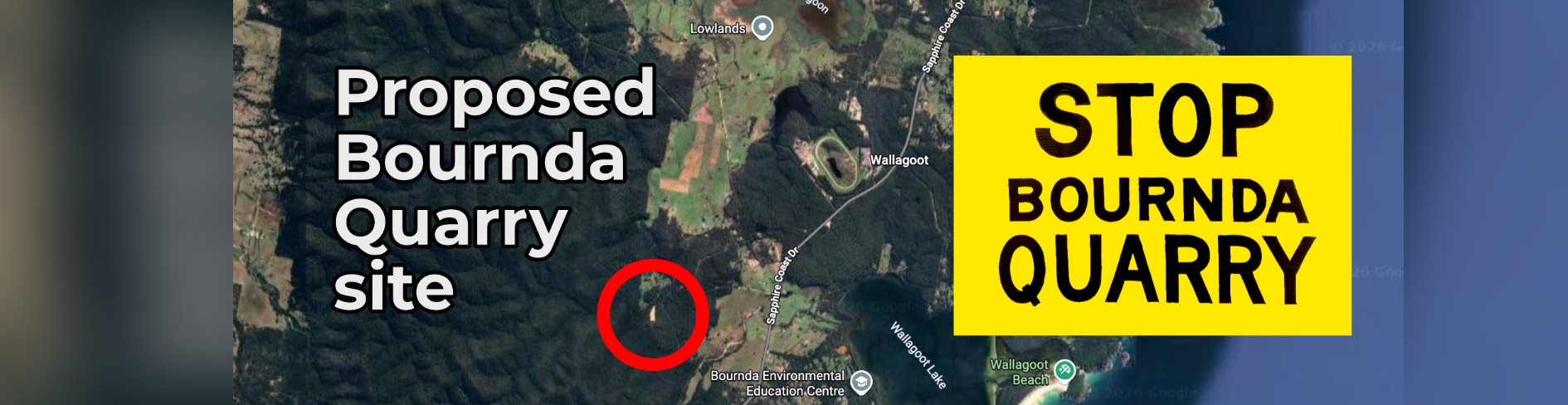
Bournda Quarry
If approved the rhyolite rock quarry will be allowed to blast, crush and extract 30,000m3 or 48,000t of material annually.
The old quarry had no crushing or screening work to be carried out on site. The proposed quarry would be crushing and screening Rhyolite (68-80% silica) onsite 6 days a week.
Crushing and screening rhyolite onsite causes a substantial increase in silica dust production, especially fine dust that can travel up to 40km away in strong winds.
Silica dust and other dust diseases
Silica dust is a carcinogen and can also cause other diseases including lung cancer or kidney disease. An estimated 230 people in Australia develop lung cancer each year due to past exposure to silica dust.
While some people may have heard about silicosis from engineered stone – a 2022-2023 case study by Queensland Health found that 57% of new cases of silicosis among workers were from mining and quarrying.
Exposure to silica dust can occur during common quarrying tasks where dust is generated, including drilling, blasting and rock breaking, as well as crushing, screening and bulk handling and mobile plant movement on unsealed roads.
Australia has only recently adopted work-place dust disease registers that include reporting of new silicosis cases for workers. The NSW register does not include mining in its statistics.
There is no similar register to track any silica dust-related diseases in people living near quarries or open mines.
What is silicosis?
Silicosis is an entirely preventable disease. It is a debilitating and often fatal lung disease and is caused by inhaling microscopic silica dust. There are three types of silicosis. Chronic silicosis can occur after 10 – 30 years exposure to silica dust (also known as respirable crystalline silica). However, Accelerated silicosis occurs within 10 years of frequent silica exposure and Acute silicosis can occur within a few weeks or years of silica exposure.
There is no cure. In its early stages it is often without symptoms. Silicosis is sometimes called the “new asbestos”.
The Bournda Downs quarry will mine rhyolite. Rhyolite has a high silica content of 69-80%.
How do you monitor silica dust?
Silica dust can be 100 times smaller than a grain of sand so you can breath it in without knowing. It is invisible and can stay in the air for a long time. While Australia has silica dust exposure limits for workplaces, the Cancer Council notes that “there is currently no evidence to suggest a safe level of silica dust exposure”.
The Bournda Downs quarry Development Application (DA) proposes to operate an open pit quarry with periodic blasting, crushing and truck transport down Sapphire Coast Drive – entering in the section of road near the Hobart Beach turn-off. When Bournda Downs quarry operated before closing in 2010 it did not undertake crushing or screening onsite and there was less public health concern about silicosis.
The Air Quality Management Plan attached to the DA discusses dust from the quarry as a general issue. However, it makes no mention of silica dust or silicosis risks. It notes that it will not undertake sampling of dust deposition from the quarry along the access road – but only makes a vague reference to do so if it poses a “nuisance to residents”. The threshold for determining what constitutes a “nuisance” is not defined.
The DA does not mention “silica” at all nor any specific measures to monitor silica dust.
.
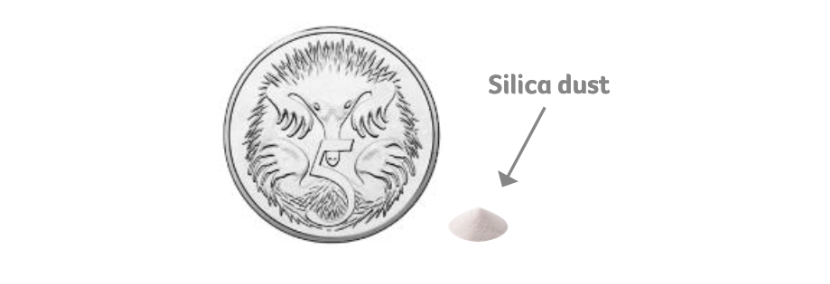
Image: Cancer Council. Breathing in the amount of silica dust shown in this picture each day means you have exceeded the workplace exposure limit of 0.05mg/m3
Concerns for residents
If quarries, mines or tunnelling projects are breaching their legislated maximum levels for silica dust in the air or failing to protect their workers this could also impact on local residents’ exposure to silica dust.
To date, there are no long-term studies tracking the health or silicosis risks of local residents near quarries in Australia. Overseas studies have found that everyday people exposed to silica dust can develop silicosis.
Animal models also show that various animals can develop silicosis or other diseases from silica dust and people may be concerned about wildlife and pets.
The Bournda Downs quarry Statement of Environmental Effects (Environmental Statement) suggests that the quarry will only have two part-time workers on site each day, working 10.5 hour shifts Monday – Saturday.
This raises questions about quarry expertise and oversight of safety measures given silicosis risks – such as air monitoring, environmental monitoring and transporting materials in trucks that may have been exposed to silica dust and associated risks to residents or workers.
The Environmental Statement also listed the estimated cost of work as $10,000. This does not suggest a heavy investment in rigorous and permanent environmental safety measures.
The Statement makes no reference to silica in the DA report. The Environmental Statement for the quarry in Council’s Development Application database does not include any studies monitoring wind speed or wind direction to consider how fine silica dust from the quarry may travel into the nearby environment.
The DA does not identify silicosis as a health risk.